Democracy does not guarantee freedom!
To truly achieve freedom, we must understand two critical aspects that define fundamentally different types of democracy.
1. Respect and Autonomy
According to the first aspect — respect and autonomy — we can distinguish two fundamentally different kinds of “democracy”:
1. a) Dictatorship of the majority
A system in which people usurp the right to dictate to others how they should live.
If you are deceptive enough and have good access to the media, you can manipulate a non-critical majority and rule the whole society.
Manipulative rulers often use leverage, as in business (used by investment funds and corporations), to control large groups.
Power seekers centralise and expand their control, creating centralised empires.
Many modern empires worked this way.
A clear example was the USSR.
Today, the EU is moving along a similar path – a centralised Moloch.
2. b) Freedom-based democracy
A system in which people respect one another.
This form of democracy is based on the principle of subsidiarity, where lower organisational levels hold greater authority.
Subsidiarity means that decisions are made at the lowest possible level capable of handling them effectively. Higher levels (municipal, state, or supranational) intervene only when lower levels cannot resolve the issue on their own.
The aim is to preserve the autonomy of smaller communities – individuals, municipalities, regions, states, and to prevent the centralisation of power.
A free society is built from the bottom up through self-governance, not through a “dictatorship of the majority”.
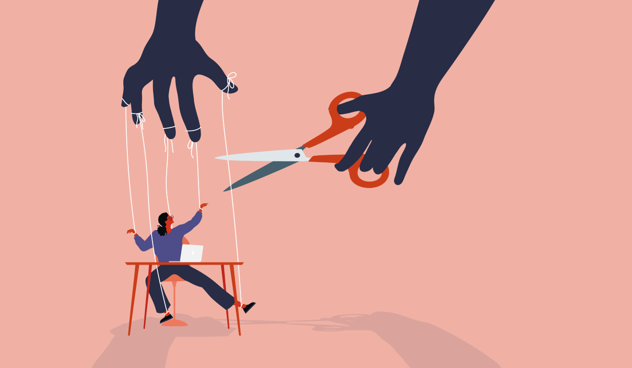
2. Right to decide
The second aspect concerns our right to decide how we want to live.
2. a) So-called representative democracy
Labeling current systems as “representative democracy” masks the fact that it is not a real democracy.
What we today call “representative democracy” is actually a rotating dictatorship, where every four years you can choose a new dictator.
The USSR was a representative democracy; it elected representatives, just as we do. Was there freedom? No.
2. b) Real – direct democracy
Real democracy, also called direct democracy, means that people themselves decide how they want to live, through assemblies or referendums.
There are also hybrid forms:
Semi-direct democracy, where people have greater rights than politicians who represent them. Citizens can always overturn political decisions; they hold the right of veto!
In practice, this system works in Switzerland, where it has functioned successfully for centuries.
Manipulators tell us that direct democracy like Switzerland’s is impossible elsewhere because people are “not smart enough“. As long as we believe this, they are right – because smart people would take responsibility and choose real, direct democracy!
However, we need to take development to a new level:
Creative democracy – where people actively participate in creating solutions for society, respect each other’s autonomy, and live by the principle of subsidiarity.
Personally, I believe we will soon move our self-organising structures much further…